Nervous-System-Informed DBT: Using Skills to Regulate Complex Trauma Clients Before EMDR
May 06, 2026
You know that feeling when a session is going somewhere real, the client is starting to touch something important, and then it happens? Their eyes go glassy. Or they spiral. Or they shut down so completely you wonder if they're still in the room with you. You spend the next 20 minutes doing damage control, and they don't come back the following week.

This is one of the most common and least-discussed frustrations in trauma therapy. Not the absence of progress. The presence of too much of it, too fast. And if you're doing EMDR, the stakes feel even higher. You're working with the nervous system directly, which means when something goes wrong, it goes wrong loudly.
This isn't a client failure. It isn't even a technique failure. It's usually a sequencing problem. And that's where DBT and nervous system regulation come in. Not as a detour from trauma work. As the work that makes trauma work possible.
DBT Through a Nervous System Lens (It's Not Just Worksheets)
When most clinicians think of DBT, they picture diary cards, chain analyses, and the occasional TIPP skill squeezed into the last five minutes of a session. Which, fair. That's how a lot of us were introduced to it.
But here's a reframe worth sitting with: DBT, when applied through a nervous system lens, is essentially a structured protocol for moving a dysregulated nervous system back toward a state where learning, connection, and processing can actually happen. Every module maps onto a physiological function, and once you see that, it changes how you use it.
Think about it this way:
- Mindfulness isn't just 'be present.' It's orienting. It's training the nervous system to check the environment for safety before reacting. It's the first step in polyvagal-informed care.
- Distress tolerance isn't just crisis management. It's teaching the nervous system to survive a threat signal without making it worse. To get through the flood without feeding it.
- Emotion regulation isn't just 'feel better.' It's building enough stability in the autonomic system that the window of tolerance can widen over time.
- Interpersonal effectiveness isn't soft skills. It's creating the relational conditions that the ventral vagal system needs to stay online.
When you look at DBT through this lens, something shifts. It stops being a separate modality and starts being the scaffolding that the nervous system informed DBT is built on. And for complex trauma clients? That scaffolding isn't optional.
Three Nervous System Patterns You're Already Seeing in Session
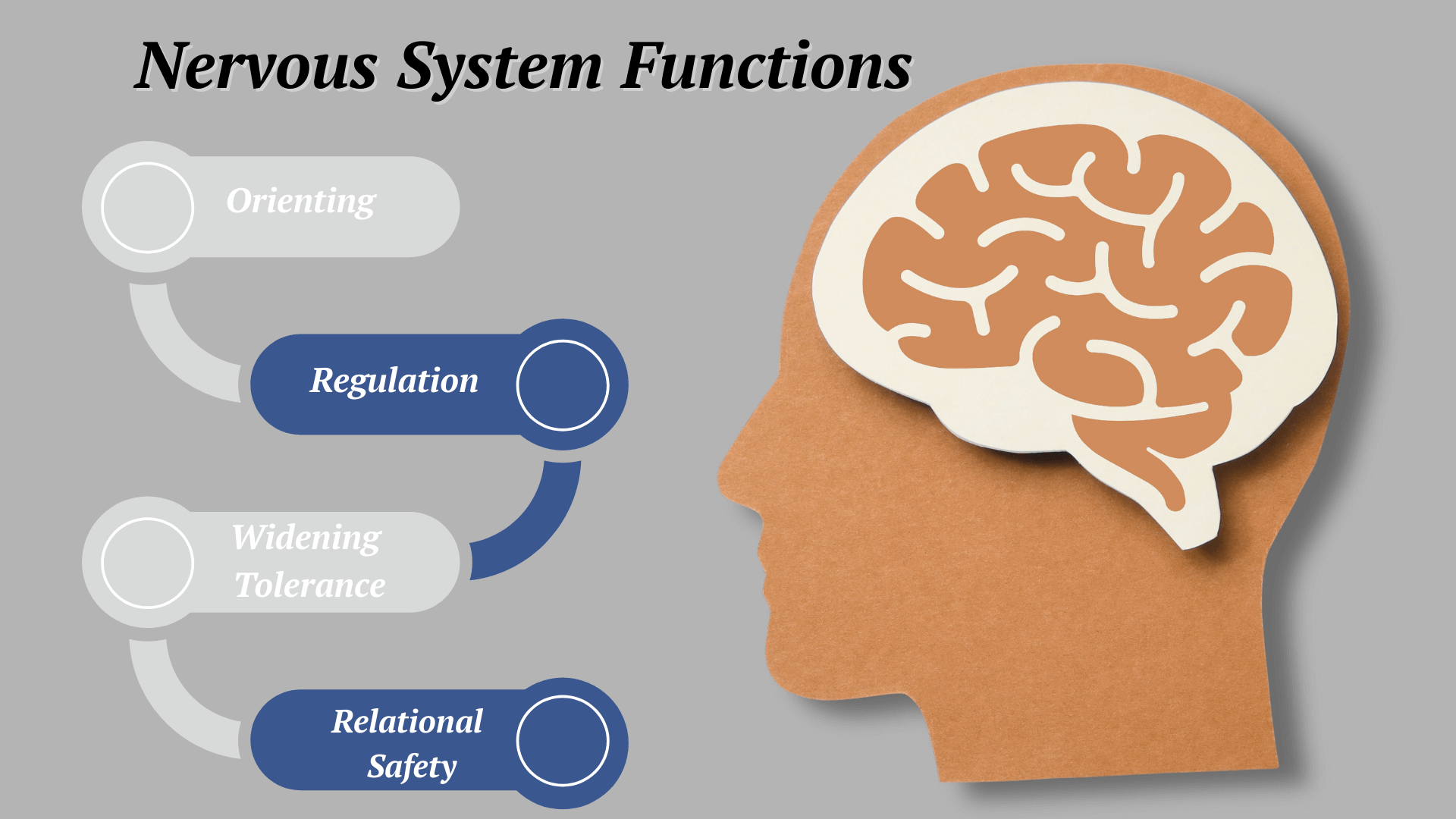
Complex PTSD doesn't show up the same way twice. But if you look closely at what's happening physiologically, most of your high-acuity clients are cycling through one of three patterns. Understanding hyperarousal and hypoarousal treatment starts with recognizing which pattern you're actually dealing with.
- Hyperarousal: The Nervous System That Can't Come Down
This client comes in activated. Sometimes they've been activated since before they walked in. They're scanning. They're reactive. Their baseline is somewhere between alert and alarm, and insight-oriented work just adds fuel. When you ask them to reflect on an experience, you're inviting them to stay in a system that is already overwhelmed. The window of tolerance isn't just narrow. It's flooded.
Trying to do trauma processing here is a bit like trying to have a thoughtful conversation in a burning building. The nervous system's job is survival, not insight.
- Hypoarousal: The Nervous System That Has Checked Out
This is the client who looks calm but isn't. They're disconnected. Flat effect. Compliant but absent. You ask how something felt and they say 'fine' with the same energy they'd use to describe the weather. This is the dorsal vagal collapse state, the nervous system's ancient shutdown response.
DBT skills for dissociation get complicated here because standard activation-based techniques can actually push a hypo-aroused client further into shutdown if they're introduced with too much intensity. The nervous system reads stimulation as threat.
- Rapid Cycling: The Nervous System That Can't Find the Middle
And then there's the client who is hyperaroused one week and unreachable the next. Or who starts a session in collapse and escalates into crisis before the hour is up. This is the most challenging pattern because the window of tolerance isn't just narrow. It's unstable. The autonomic dysregulation is itself unpredictable.
For all three of these patterns, jumping straight to trauma processing without a regulation foundation isn't brave clinical work. It's a setup for rupture, dropout, and harm.
Matching DBT Skills to Nervous System States in Trauma Therapy
This is where DBT skills for complex trauma get genuinely practical. Because the question isn't 'should I use DBT?' It's 'which skill, for which state, delivered how?'
For hyperaroused clients: Slow it down
The goal here isn't to eliminate the activation. It's to give the nervous system a competing signal. Skills that work well:
- TIPP (Temperature, Intense exercise, Paced breathing, Paired muscle relaxation) work because they directly engage the parasympathetic nervous system through physiological input.
- Paced breathing at a 5-7 second exhale-to-inhale ratio activates the vagal brake.
- Sensory grounding that orients to the present environment (five things I can see, four I can feel) borrows from the orienting response in polyvagal theory.
The key is to introduce these slowly, in small doses, and to name what you're doing and why. The nervous system trusts predictability.
A practical example: Before beginning any processing with a hyperaroused client, spend the first 15 minutes in a structured grounding protocol. Not as a formality. As a genuine physiological intervention. Track their activation level. Only begin deeper work when they can report being in a manageable range.
For hypoaroused clients: Bring the system online gently
This is where DBT skills for dissociation require real adaptation. The instinct is to do more to reach the client who seems far away. But with hypoarousal, the answer is often less, slower, and warmer.
- Gentle activating mindfulness: slow, tracked movement rather than stillness. Some clients find that drawing attention to physical sensation (the weight of feet on the floor, the texture of a fabric) is activating enough to bring them back into contact.
- Build mastery activities: small, structured wins between sessions that rebuild a sense of agency in the body.
- Behavioral activation with low threshold: not productivity. Just re-engagement with something pleasant or sensory.
The answer to the question many clinicians ask, 'Can I use DBT skills with clients who are in a dissociative or hypoaroused state, or do the skills only work when clients are activated?', is yes, but with deliberate adaptation. The standard DBT crisis survival toolkit is designed for activation. For shutdown states, you're looking at the gentler, orienting end of the skill set. Think bilateral tapping, slow rhythmic movement, warmth, and co-regulation before self-regulation.
For rapid-cycling clients: Build structure before content
The clients who cycle unpredictably between states need something different from either targeted up-regulation or down-regulation. They need predictability in the therapeutic frame itself.
- Emotion regulation skills that focus on accumulating positive experiences create a more stable autonomic baseline over time.
- Check-in at the start of each session using a simple body-based scale (0-10 activation, 0-10 presence) helps both the client and the clinician orient before deciding what kind of work is appropriate that day.
- PLEASE skills (treating PhysicaL illness, Eating balanced, Avoiding mood-altering substances, Sleep, Exercise) support the physiological substrate that makes regulation possible.
DBT vs. Grounding Exercises: Why the Distinction Matters
A question that comes up a lot: 'How is DBT different from just doing grounding exercises with dysregulated clients?'
It's a fair question and an important one. The answer comes down to structure, sequencing, and scaffolding. A grounding exercise is a single intervention. DBT and nervous system regulation is a framework that teaches clients to understand their own states, choose appropriate tools, apply them consistently between sessions, and build skills over time. It includes psychoeducation about the nervous system itself, so clients develop the metacognitive capacity to recognize when they're dysregulated and why. A grounding exercise can stop a spiral in the moment. A DBT-informed framework changes the terrain those spirals happen on.
That's not a small distinction when you're working with complex PTSD and chronic nervous system dysfunction.
Stabilization Before Trauma Processing Is Ethical Clinical Work, Not a Delay
Let's address the guilt directly, because it's real and it shows up in supervision constantly.
You have a client sitting across from you who has been carrying something unbearable for years. You know that EMDR can help. You know the protocol. And you're spending sessions teaching them how to pace their breathing and build a containment container. It can feel like you're stalling. Like you're afraid. Like you're not doing the real work.
You're not stalling. You're practicing phase-oriented trauma treatment as it was designed to be practiced.
The research on complex trauma treatment is clear: clients with significant dysregulation, dissociation, and narrow windows of tolerance require stabilization before reprocessing not because reprocessing is unavailable to them, but because without stabilization, reprocessing often re-traumatizes rather than heals. The traumatic material activates without sufficient capacity to integrate it. The nervous system gets flooded and the client learns that treatment isn't safe.
Stabilization before trauma processing isn't a delay. It's the foundation that makes processing possible. It also protects clinicians from vicarious traumatization by keeping sessions within a manageable range for both people in the room.
There's also this: when clients leave a stabilization-focused session feeling genuinely more regulated, more capable, more understood, they come back. When they leave a processing session having been overwhelmed, they often don't.
The question to ask isn't 'am I moving too slowly?' It's 'is my client building capacity?' If the answer is yes, you're doing trauma work. It just doesn't always look like bilateral stimulation.
Will Clients Think You've Given Up on Trauma Processing?
This is the third question worth naming directly: 'If I start teaching DBT skills, will my clients think I've given up on trauma processing?'
Some will ask. And it's a great therapy moment when they do.
The framing that works: 'We're not pausing the work. We're building the conditions that make the work you want to do possible. Your nervous system needs certain tools before it can process the harder material safely. We're making those tools together.'
Most clients who have been in therapy before have had the experience of going somewhere overwhelming and not coming back from it cleanly. When you name what you're doing and why, and when you tie it explicitly to the eventual goal of processing, clients generally respond with relief, not disappointment. They want the work to be sustainable.
Transparency about the rationale is itself a therapeutic intervention. It builds the kind of predictability and relational safety that the therapeutic relationship research consistently identifies as a primary driver of outcomes.
Integrating DBT with EMDR and Other Trauma Modalities
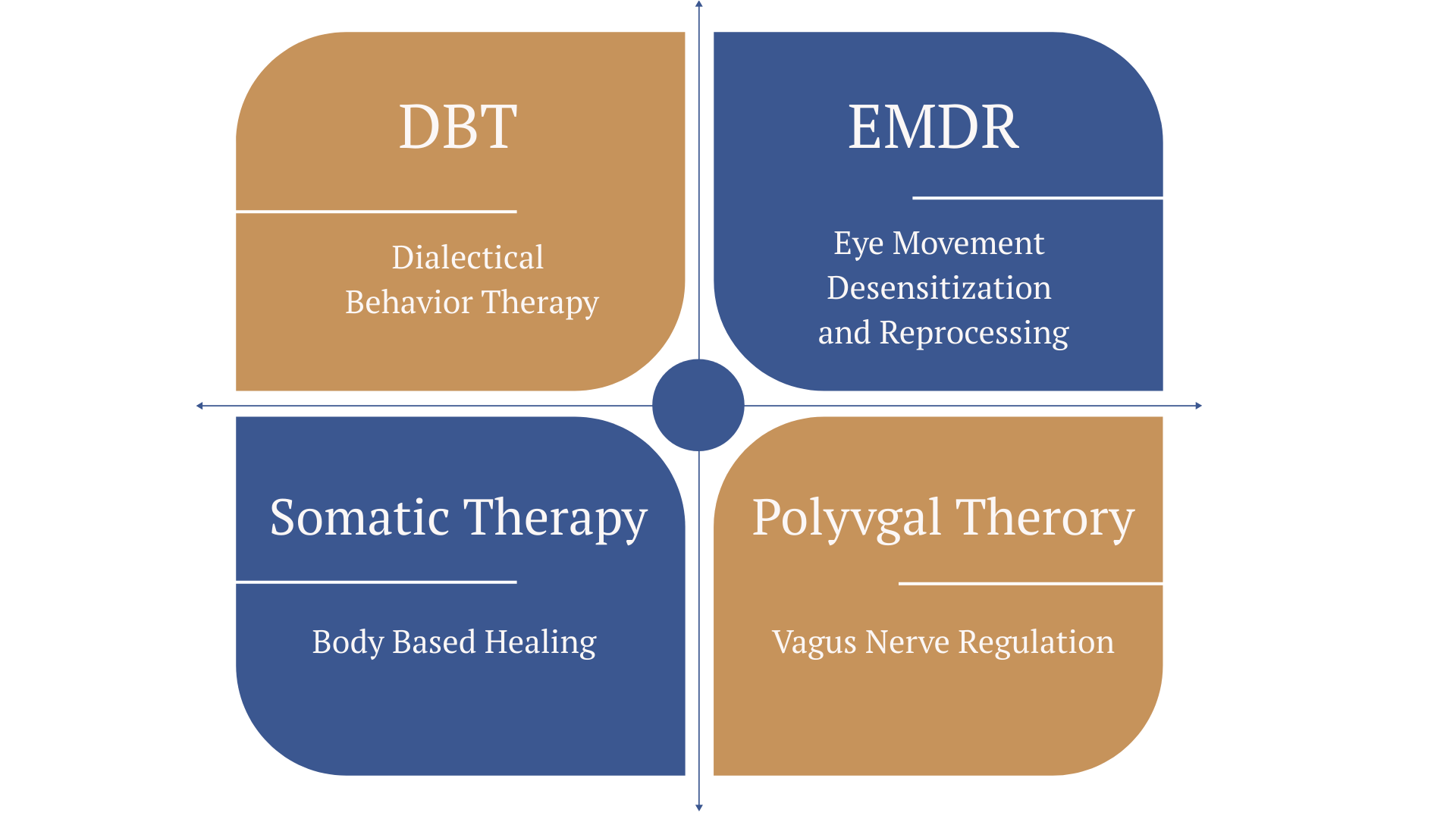
The practical integration of DBT-informed EMDR practice happens most naturally in the early phases of EMDR. During history-taking and case conceptualization, you're already assessing nervous system dysregulation in EMDR clients. Adding a formal assessment of the client's current skill set and dysregulation patterns simply makes that process more precise.
In Phase 2 (Preparation), DBT skills become the explicit content. You're not just installing resources. You're building a DBT-informed stabilization protocol that the client will use between sessions and, eventually, as anchors during reprocessing itself.
During active reprocessing, a client who has internalized paced breathing, sensory grounding, and distress tolerance skills has portable anchors they can access when a channel becomes too activating. Instead of stopping the protocol entirely, you can redirect, re-resource, and return. That's a very different clinical experience for everyone involved.
The compatibility with other trauma-informed approaches is also worth naming. DBT skills training pairs naturally with somatic approaches because both work at the body level before the narrative level. It aligns with parts work (IFS) because the skill of wise mind directly addresses internal conflict between emotional mind and reasonable mind, which maps onto parts language easily. And polyvagal-informed practice provides the neuroscientific framework that makes the DBT rationale land with clients who want to understand the 'why.' These approaches aren't competing. They're complementary.
Where to Learn Nervous-System-Informed DBT Skills for Trauma Practice
The research base for DBT in trauma treatment has grown substantially. Recent studies continue to support the effectiveness of DBT-PTSD protocols for complex trauma populations. But reading the literature and knowing how to apply it with a high-acuity caseload are genuinely different things.
Most DBT training programs are designed around the standard outpatient model for borderline personality disorder. They don't address the specific nervous system patterns you encounter in complex trauma work. They don't account for the intersection with EMDR preparation. They don't speak to compassion fatigue and the clinician's own physiological experience in the room.
TTI's Intro to DBT: Skills Training for the Attuned Trauma Therapist was built for a different context. The training is specifically designed for trauma therapists working with complex presentations, high-acuity clients, and the real clinical challenges that come with that territory. It covers the nervous system framework alongside the skills themselves, so you leave with both the theoretical foundation and the practical application.
The live training includes real-time consultation, case discussion, and the kind of collegial conversation that makes skills training actually stick. On-demand access means you can integrate it into your schedule without clearing a week of your caseload.
If your practice includes clients with complex PTSD, chronic dysregulation, or presentations that have stalled or destabilized in standard trauma protocols, this training was designed for exactly what you're facing.
Register for Intro to DBT: Skills Training for the Attuned Trauma Therapist here.
The Nervous System Doesn't Lie
Here's the bottom line: when a client keeps getting overwhelmed, keeps shutting down, keeps not coming back after 'too much,' the nervous system is telling you something. It's not saying the trauma is too big to touch. It's saying the container isn't ready.
A nervous system informed DBT approach is what builds that container. Methodically. Collaboratively. With enough structure that even the most dysregulated nervous system starts to believe that regulation is possible.
That belief is the foundation everything else is built on. And it turns out, once clients have it, trauma processing moves faster, not slower.
You're not delaying the work. You're making it possible.
Ready to build a nervous-system-informed DBT framework for your trauma practice? Explore TTI's Intro to DBT training here.
References
Peer-Reviewed Journal Articles
Beed, A., & Harricharan, R. (2019). Dialectical behaviour therapy for post-traumatic stress disorder: A systematic review. Borderline Personality Disorder and Emotion Dysregulation, 6, Article 7. https://bpded.biomedcentral.com/articles/10.1186/s40479-019-0099-y
Bohus, M., Dyer, A. S., Priebe, K., Kruger, A., Kleindienst, N., Schmahl, C., Niedtfeld, I., & Steil, R. (2013). Dialectical behaviour therapy for post-traumatic stress disorder after childhood sexual abuse in patients with and without borderline personality disorder: A randomised controlled trial. Psychotherapy and Psychosomatics, 82(4), 221-233. https://pmc.ncbi.nlm.nih.gov/articles/PMC6438759/
Cloitre, M., Garvert, D. W., Brewin, C. R., Bryant, R. A., & Maercker, A. (2013). Evidence for proposed ICD-11 PTSD and complex PTSD: A latent profile analysis. European Journal of Psychotraumatology, 4(1), Article 20706. https://pmc.ncbi.nlm.nih.gov/articles/PMC3705500/
Dyer, K. F. W., Dorahy, M. J., Hamilton, G., Corry, M., Shannon, M., MacSherry, A., McRobert, G., Elder, R., & McElhill, B. (2009). Anger, aggression, and self-harm in PTSD and complex PTSD. Journal of Clinical Psychology, 65(10), 1099-1114. https://pmc.ncbi.nlm.nih.gov/articles/PMC3871835/
Figley, C. R. (2002). Compassion fatigue: Psychotherapists' chronic lack of self care. Journal of Clinical Psychology, 58(11), 1433-1441. https://pmc.ncbi.nlm.nih.gov/articles/PMC8812061/
Ford, J. D., & Courtois, C. A. (2014). Complex PTSD, affect dysregulation, and borderline personality disorder. Borderline Personality Disorder and Emotion Dysregulation, 1, Article 9. https://pmc.ncbi.nlm.nih.gov/articles/PMC4579511/
Harricharan, S., Nicholson, A. A., Densmore, M., Frewen, P. A., McKinnon, M. C., Theberge, J., & Lanius, R. A. (2019). Sensory overload and imbalance in dissociative PTSD: Functional connectivity and symptom relationships. Neuropsychologia, 132, Article 107116. https://pmc.ncbi.nlm.nih.gov/articles/PMC9635467/
Hogberg, G., Pagani, M., Sundin, O., Soares, J., Aberg-Wistedt, A., Tarnell, B., & Hallstrom, T. (2007). On treatment with eye movement desensitization and reprocessing of chronic post-traumatic stress disorder in public transportation workers: A randomized controlled trial. Nordic Journal of Psychiatry, 61(1), 54-61. https://pmc.ncbi.nlm.nih.gov/articles/PMC6426800/
Lanius, R. A., Bluhm, R. L., & Frewen, P. A. (2011). How understanding the neurobiology of complex post-traumatic stress disorder can inform clinical practice: A social cognitive neuroscience approach. Acta Psychiatrica Scandinavica, 124(5), 331-348. https://pmc.ncbi.nlm.nih.gov/articles/PMC12406319/
Linehan, M. M., Comtois, K. A., Murray, A. M., Brown, M. Z., Gallop, R. J., Heard, H. L., Korslund, K. E., Tutek, D. A., Reynolds, S. K., & Lindenboim, N. (2006). Two-year randomized controlled trial and follow-up of dialectical behavior therapy vs therapy by experts for suicidal behaviors and borderline personality disorder. Archives of General Psychiatry, 63(7), 757-766. https://pmc.ncbi.nlm.nih.gov/articles/PMC5021701/
Mavranezouli, I., Megnin-Viggars, O., Daly, C., Dias, S., Welton, N. J., Stockton, S., Bhutani, G., Grey, N., Leach, J., Greenberg, N., Katona, C., El-Leithy, S., & Pilling, S. (2020). Psychological treatments for post-traumatic stress disorder in adults: A network meta-analysis. Psychological Medicine, 50(4), 542-555. https://pmc.ncbi.nlm.nih.gov/articles/PMC9848310/
McCann, I. L., & Pearlman, L. A. (1990). Vicarious traumatization: A framework for understanding the psychological effects of working with victims. Journal of Traumatic Stress, 3(1), 131-149. https://pmc.ncbi.nlm.nih.gov/articles/PMC10455772/
Ogden, P., Pain, C., & Fisher, J. (2006). A sensorimotor approach to the treatment of trauma and dissociation. Psychiatric Clinics of North America, 29(1), 263-279. https://pmc.ncbi.nlm.nih.gov/articles/PMC12065370/
Ogden, P., & Minton, K. (2000). Sensorimotor psychotherapy: One method for processing traumatic memory. Traumatology, 6(3), 149-173. https://www.researchgate.net/publication/41111427_Autonomic_dysregulation_and_the_Window_of_Tolerance_Model_of_the_effects_of_complex_emotional_trauma
Porges, S. W. (2025). Polyvagal theory: Current status, clinical applications, and future directions. Clinical Neuropsychiatry, 22(3), 175-191. https://pmc.ncbi.nlm.nih.gov/articles/PMC12302812/
Sachser, C., Goldbeck, L., Doyle, O., Rossmann, A., Kley, H., Merkel, C., Muche, R., & Rosner, R. (2022). The impact of trauma-focused CBT for PTSD on emotion regulation and behavioral problems in youth: A randomized-controlled trial. Journal of Child Psychology and Psychiatry, 63(5), 512-521. https://pmc.ncbi.nlm.nih.gov/articles/PMC9635467/
Steil, R., Dittmann, C., Muller-Engelmann, M., Muche, R., Priebe, K., Bohus, M., & Fydrich, T. (2018). Dialectical behaviour therapy for posttraumatic stress disorder related to childhood sexual abuse: A pilot study in an outpatient treatment setting. European Journal of Psychotraumatology, 9(1), Article 1423832. https://pmc.ncbi.nlm.nih.gov/articles/PMC6438759/
van der Hart, O., Nijenhuis, E. R. S., & Steele, K. (2006). The haunted self: Structural dissociation and the treatment of chronic traumatization. Journal of Trauma & Dissociation, 7(4), 1-10. https://pmc.ncbi.nlm.nih.gov/articles/PMC3705500/
Web Resources
Baranowsky, A. B. (2022). Understanding the window of tolerance in trauma theory. International Society for Traumatic Stress Studies. https://iptrauma.org/docs/body-of-knowledge-of-psychotraumatology/understanding-the-window-of-tolerance-in-trauma-theory/
EMDRIA. (2023). EMDR therapy and DBT for trauma-focused care: A beautiful fusion. EMDR International Association. https://www.emdria.org/learning-class/emdr-therapy-and-dbt-for-trauma-focused-care-a-beautiful-fusion/
Institute for Functional Medicine. (2023). Understanding PTSD from a polyvagal perspective. The Institute for Functional Medicine. https://www.ifm.org/articles/understanding-ptsd-from-a-polyvagal-perspective
Krantz, L. (2018). Trauma stabilization through polyvagal theory and DBT. Counseling Today. https://www.counseling.org/publications/counseling-today-magazine/article-archive/article/legacy/trauma-stabilization-through-polyvagal-theory-and-dbt
NICABM. (2023a). How to help your clients understand their window of tolerance. National Institute for the Clinical Application of Behavioral Medicine. https://www.nicabm.com/trauma-how-to-help-your-clients-understand-their-window-of-tolerance/
NICABM. (2023b). Polyvagal theory explained. National Institute for the Clinical Application of Behavioral Medicine. https://www.nicabm.com/topic/polyvagal-theory-explained/
NICABM. (2023c). Window of tolerance. National Institute for the Clinical Application of Behavioral Medicine. https://www.nicabm.com/topic/window-of-tolerance/
Polyvagal Institute. (2024). What is polyvagal theory? https://www.polyvagalinstitute.org/whatispolyvagaltheory
Wildflower Center for Emotional Health. (2023). Dialectical behavior therapy in the treatment of trauma. https://www.wildflowerllc.com/dialectical-behavior-therapy-in-the-treatment-of-trauma/
TTI Internal Resources
Trauma Therapist Institute. (2024a). EMDR and complex PTSD. https://www.traumatherapistinstitute.com/emdr-and-complex-ptsd
Trauma Therapist Institute. (2024b). EMDR and somatic therapy. https://www.traumatherapistinstitute.com/EMDR-and-Somatic-Therapy
Trauma Therapist Institute. (2024c). EMDR vs. somatic experiencing. https://www.traumatherapistinstitute.com/blog/EMDR-vs-Somatic-Experiencing
Trauma Therapist Institute. (2024d). Polyvagal theory and EMDR. https://www.traumatherapistinstitute.com/Polyvagal-Theory-and-EMDR
Stay connected with fun info, news, promotions and updates!
Join our mailing list to receive the latest news and updates from our team.
Don't worry, your information will not be shared.