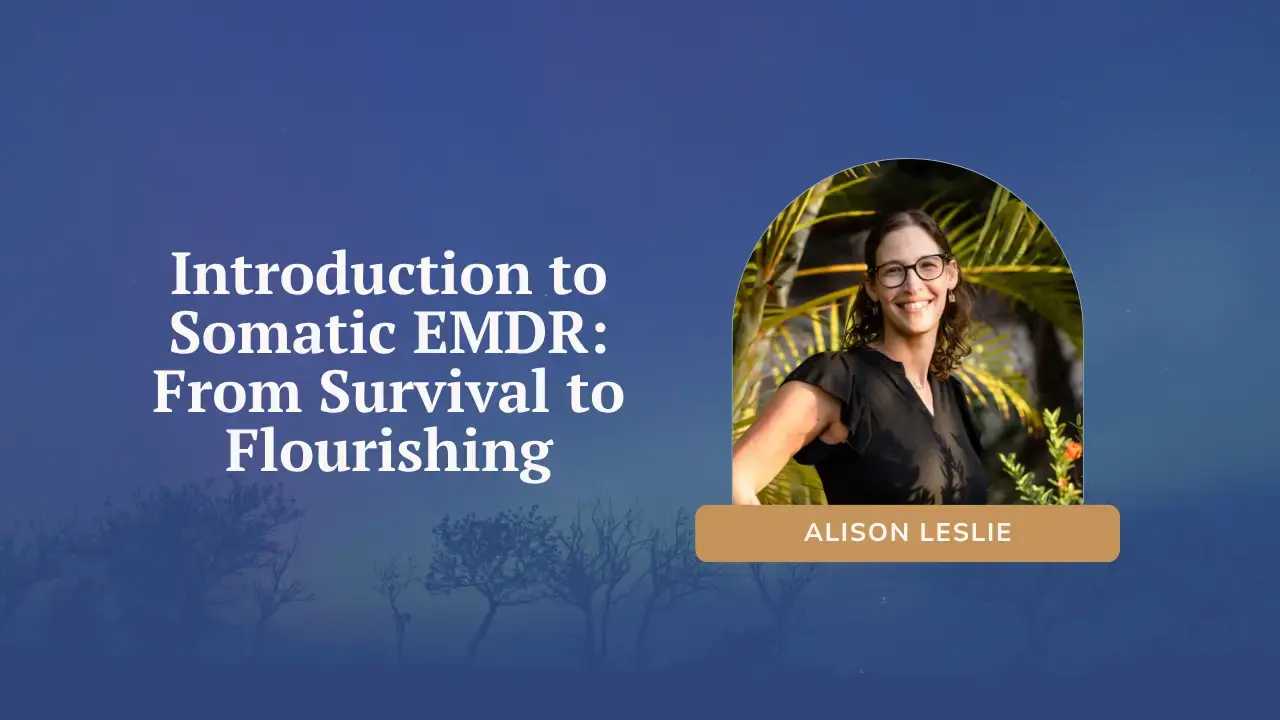
Somatic EMDR Training: Advanced Trauma Therapy Practitioner Program
Trainer:Â Alison Leslie, LCSW, SEP
Live Virtual Training: May 7th, 14th, 21st, 28th, June 4th | 10:00 am Central | Available for synchronous, live learning
On-Demand:Â Available one week after the live event
From Survival to Flourishing: Somatic EMDR in Practice
Some clients “do EMDR” exactly as they were trained to. Their bodies don’t. They go numb when you approach certain targets. They flood after sessions, even with careful pacing. They stay “fine” on the surface while their nervous systems are quietly stuck in survival.
If you’re ready to bring the body fully into your EMDR work, with interventions that honor EMDR fidelity and the lived wisdom of somatic therapy, this advanced Somatic EMDR Training for EMDR therapists is for you.
In this experiential, EMDRIA‑approved training with Alison Leslie, LCSW, SEP, you’ll learn how to integrate somatic trauma therapy principles into every phase of EMDR. You’ll leave with concrete maps, scripts, and somatic interventions you can immediately use with trauma clients on your caseload.

Live Training Dates:
May 7th | May 14th | May 21st | May 28th | June 4th
10 am - 1:15 pm CentralÂ
Live Q&A Dates
May 13th | May 27th
 1:00 - 2:00 pm Central
This program consists of on-demand, asynchronous lessons along with live, synchronous group consultation.
Practical Interventions You'll Learn
By the end of this somatic EMDR practitioner training, you’ll be able to:
- Pendulate autonomic activation and safety so clients can process trauma without flooding, shutdown, or dissociation.
- Stabilize dysregulated clients in real time using somatic orienting and grounding when sessions start to unravel.
- Unblock stuck EMDR processing with targeted somatic interweaves when reprocessing stalls.
- Track subtle body cues (breath, posture, tension, micro-movements) to guide moment-to-moment clinical decisions.
- Access implicit trauma memory through felt sense work when clients can’t verbalize what’s happening.
- Build true dual awareness so clients stay present while engaging traumatic material.
- Design individualized Phase 2 preparation plans using body-based regulation tools.
- Read autonomic state shifts to confidently adjust pacing, set length, and intervention choice.
- Support completion of unfinished fight/flight/freeze responses without retraumatizing clients.
- Integrate somatic interventions within EMDR fidelity so your work stays creative, ethical, and evidence-aligned.
These are not add‑ons or “nice extras”. They’re practical, repeatable tools you can bring into your EMDR sessions with children, adolescents, and adults starting this week.

What You'll Learn in This EMDRIA-Approved Practitioner Program
Trauma doesn’t just live in the story. It lives in sensation, posture, impulse, and the body’s ongoing attempts to stay safe.
In this intensive somatic EMDR and trauma therapist training, you’ll learn how to:
- Recognize somatic signs of unresolved trauma and developmental injury in EMDR case presentations, including when clients are hypo‑ or hyper‑aroused, stuck in fawn, or have little explicit memory.
- Apply the eight phases of EMDR therapy through a somatic lens, from history taking and preparation through reprocessing, closure, and re‑evaluation.
- Develop somatic‑informed case conceptualizations that integrate the AIP model, polyvagal theory, and the capabilities approach (what was possible/not possible in each “nest” of a client’s life).
- Use specialized resourcing strategies, including orienting, self‑touch, micro‑movement, and felt‑sense language, to stabilize clients whose bodies learned that the world is unsafe.
- Formulate EMDR targets that incorporate somatic and developmental themes, not just single events, while remaining culturally responsive and non‑pathologizing.
- Implement specific interventions for blocked or dysregulated processing, including when clients freeze, dissociate, or can’t feel their bodies during sets.
- Work effectively with implicit and fragmented trauma memories, including pre‑verbal, medical, and attachment wounds where there is “no story, just a body response.”
- Support clients in moving from survival to flourishing, helping them build new neural pathways for safety, connection, play, and agency - not just symptom reduction.
You’ll gain a clear map for somatic EMDR, step‑by‑step tools, and repeated practice so you can bring this work confidently into your sessions.
Who is This Program For?
This advanced EMDR therapist training is designed for:
- EMDR‑trained clinicians who sense that their clients’ bodies are holding more than the standard protocol is currently reaching.
- Trauma therapists who want to integrate somatic trauma therapy training into EMDR without abandoning fidelity to the 8‑phase model.
- Practitioners working with developmental and attachment trauma, complex PTSD, dissociation, and chronic threat, including clients who:
- go numb or freeze as soon as certain targets get close
- flood after sessions despite careful preparation
- have highly implicit, pre‑verbal, or body‑based trauma memories
- Therapists who want a more embodied, polyvagal‑informed way to pace EMDR with children, adolescents, and adults.
- EMDR consultants and supervisors seeking a stronger somatic framework to support consultees who feel stuck with “hard‑to‑move” cases.
- If you’re committed to helping clients not only process trauma but also feel more at home in their bodies and lives, this somatic EMDR practitioner program will give you the structure and skills you need.
(Prerequisite: EMDR Basic Training)
About Your Trainer, Alison Leslie, LCSW, SEP
Alison Leslie, LCSW, SEP is a trauma-informed clinician, trainer, and consultant in Bloomington, IN. Alison owns the private practice Empower Healing Counseling and Consultation and is known for creating safe spaces where clients and therapists feel seen, supported, and empowered. She specializes in EMDR, somatic therapy, and the healing power of the human-animal bond, one of the few practitioners blending these modalities at an expert level. Known for her warm, curiosity-based teaching approach, Alison helps mental health professionals reconnect with their clinical confidence and trust their own intuitive wisdom, especially when working with complex cases.
Additional Information
Prerequisites
Learning Objectives
Continuing Education
Schedule
Course Completion
Cancellation Policy
Withdrawal & Refund Policy
Flexible Payment Options Available
As low as $148.50 a month or $297 pay in full.
For US residents, financing is available for as low as $74.50/month with Klarna/Afterpay options!
- Pay in full via card, Google Pay, or Apple Pay
- Spread payments over 2 months with in-house financing (0% APR)
- Extended financing up to 18 months is available through Klarna or Afterpay