Price: $97
- Lifetime access to the course - Refresh your skills anytime at your own pace. Get on-demand access after the live date.
- Immediate clinical application - Walk away with tools you can use in your next session.
- CEs - Earn ASWB and NBCC CEs.

A spiritual trauma recovery training for therapists who want to integrate spirituality into trauma work ethically and clinically.
Trainer: Sabrina N'Diaye, PhD, MDiv, LCSW-C
On-Demand: Available with lifetime access for asynchronous learning. This course was recorded on December 4, 2025.
Many trauma survivors carry spiritual wounds alongside psychological and relational ones. For therapists, spirituality can feel both essential and intimidating: vital to healing, but easy to mishandle.
This spiritual trauma recovery training is designed for clinicians across backgrounds and modalities who want to integrate spirituality into trauma therapy ethically and clinically, in a way that honors each client’s spiritual lineage. You’ll explore how neuroscience, spiritual wisdom, and somatic approaches can work together to foster profound trauma healing.
Through a thoughtful, research‑informed curriculum that respects diverse cultural and spiritual belief systems, you will deepen your understanding of the neurobiological and psychological impact of spirituality on trauma, and learn how to cultivate inclusive, compassionate spaces for healing. Whether you’re seeking practical tools, increased cultural responsiveness, or a deeper sense of purpose in your clinical work, this course will equip you to support each client’s journey with integrity and depth.
Because the best learning happens when you feel safe. Ask freely, show up fully, and learn in a relational, non-judgmental environment built for practitioners like you.
Expect real case examples, practical guidance, and a teaching style that makes even the hardest topics feel approachable.
Join a community of learners with EMDRIA-approved training, CE hours, structured pathways, and lifetime access to support you every step of the way.
In this spiritual trauma recovery training, you'll learn how to:

By the end of this training, you will be able to:
On-demand integrative training, culturally responsive teaching, and a supportive professional community.
.png?width=310&height=388&name=Untitled%20design%20(9).png "Untitled design (9)")
Identify when spiritual wounds sit alongside psychological and relational ones in client presentations.
Explain the neurobiological and psychological impact of spiritual wounding and recovery.
Apply ritual, guided imagery, and conscious breathwork in clinically grounded, regulating ways.
Submit questions and connect with peers through the on-demand course community.
Hold the sacred without imposing beliefs, appropriating traditions, or coercing clients.
Watch live or access the replay for seven days. Learn on your schedule.
Case-grounded teaching from a PhD in Mind-Body Medicine, MDiv, LCSW-C, and longtime senior faculty with the Center for Mind-Body Medicine.
Join TTI's free membership for conversations and resources. No cost, no catch.
This course is ideal for trained therapists who can feel the spiritual dimensions of their clients’ trauma, but haven’t been given clear, ethical frameworks or tools to address them. It’s especially relevant if you want to:

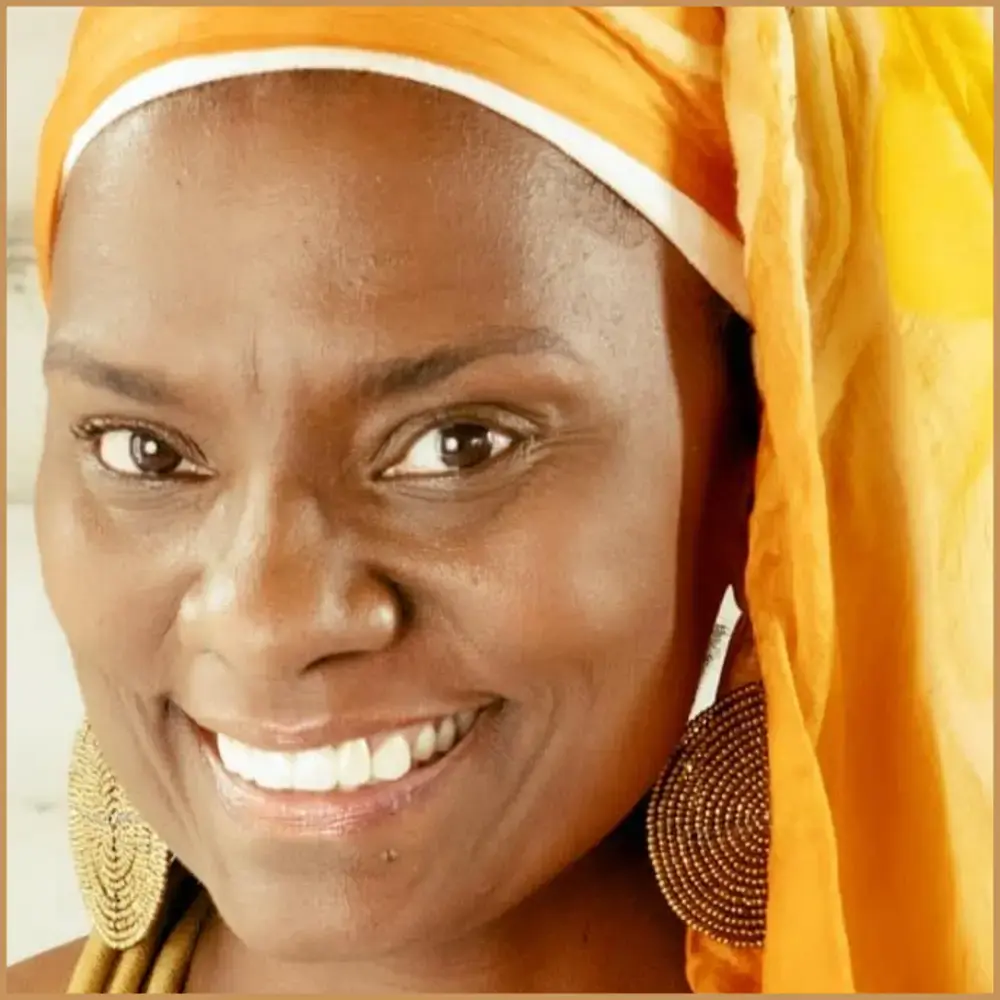
Dr. Sabrina N'Diaye is a therapist, storyteller, and spiritual teacher who has spent over a decade integrating spirituality, mind‑body medicine, and trauma therapy with individuals and communities around the world. As an integrative therapist, author, and peacebuilder, she blends ancient spiritual practices with the latest scientific research to guide others on their healing journeys. She is affectionately referred to as “Sister Sabrina” in the communities she serves.
Dr. Sabrina holds a PhD in Mind‑Body Medicine from Saybrook University, where her research focused on the use of guided imagery as a healing tool for African American women with chronic STIs. She is the founder of The Heart Nest Center for Peace and Healing, where she lovingly serves women, couples, and small groups. A passionate storyteller, Dr. Sabrina is a strong advocate for the power of narrative in the healing process.
Welcome, objectives, and presenter introduction
The Sacred Landscape of Trauma
Neuroscience Meets the Sacred
Exploring the Wounds of the Spirit
Sacred Tools for the Healing Journey
The Healer’s Spirit
Integration, Ethics, and Application
Wrap-up, key takeaways, and Q&A
This is not an EMDR training.
6 CEs is available upon completion of all course material.
Trauma Therapist Institute is an approved continuing education provider. ACE and NBCC CEs are available for this course. This course is not approved for APA or EMDRIA CEs.
Participants must complete the full training to receive credit.
Trauma Therapist Institute, #1869, is approved as an ACE provider to offer social work continuing education by the Association of Social Work Boards (ASWB) Approved Continuing Education (ACE) program. Regulatory boards are the final authority on courses accepted for continuing education credit. ACE provider approval period: 1/16/25 - 1/16/28. Social workers completing this course receive 6 clinical continuing education credits.
Trauma Therapist Institute has been approved by NBCC as an Approved Continuing Education Provider, ACEP No. 7033. Programs that do not qualify for NBCC credit are clearly identified. Kase & CO is solely responsible for all aspects of the programs.
To receive a CE certificate, participants must complete the entire course, complete the post-test with a score of 80% or above, and complete the course evaluation. You may retake the post-test as needed. Once completed, a CE certificate will auto-populate to your online account.
Please reference our cancellation policy here (bottom section of this page).