When "Nothing Happened": How EMDR Can Treat Emotional Neglect
Mar 17, 2026
Written By: The TTI Team
Reading Time: 8 Minutes
She sits across from you, hands folded neatly in her lap, describing a childhood that sounds perfectly acceptable on paper. Two parents, stable home, no abuse, college fund intact. "I don't know why I'm like this," she says, gesturing vaguely at herself. "Nothing really bad happened."
But here's what did happen: she learned to stop crying by age three because no one came. She perfected the art of need-minimization before kindergarten. She became fluent in emotional self-sufficiency while other kids were still learning to tie their shoes.
And now, at 34, she's in your office describing anxiety she can't explain, a bone-deep loneliness that makes no sense given her "good childhood," and a nagging sense that she's fundamentally too much and simultaneously not enough.
You're a trained EMDR therapist. You know how to work with clear traumatic incidents. But this? This feels like trying to target fog.
Welcome to the muddy, complicated world of emotional neglect - where the trauma isn't what happened, but what didn't.
What Emotional Neglect Actually Is (And Why It Counts)
Let's get definitional for a moment, because emotional neglect is one of those terms that gets thrown around until it loses meaning.
Emotional neglect isn't about parents who occasionally miss a softball game or forget to ask about your day. It's the chronic absence of emotional attunement and co-regulation during critical developmental windows. It's misattunement as a way of life.
Think of it this way: if trauma is typically what breaks through and overwhelms the nervous system, emotional neglect is what never gets built in the first place. The secure base isn't shattered; it was never constructed.
What does that look like in real life?
- A toddler whose distress signals are consistently ignored or minimized
- A child whose emotional experiences are regularly dismissed ("You're fine, stop crying")
- A teenager who learns their inner world is fundamentally uninteresting to their caregivers
- A young adult who realizes they've been parenting their own feelings since age seven
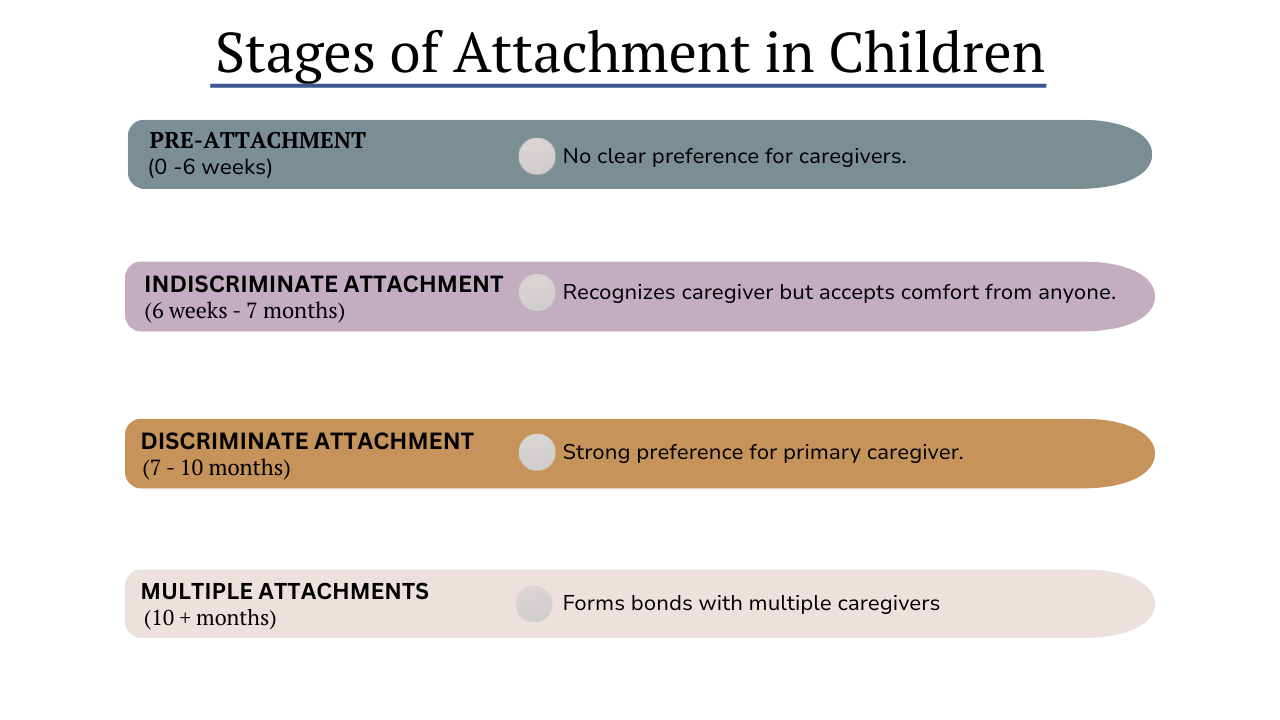
The research backs this up. Studies on attachment and internal working models show that children develop core beliefs about relationships based on early caregiver responsiveness. When that responsiveness is chronically absent, kids don't just feel sad. They construct entire belief systems: I don't matter. My needs are burdensome. I have to do it myself.
These internal working models become the lens through which every future relationship gets filtered. And unlike discrete traumatic events, these beliefs don't announce themselves with flashbacks or nightmares. They show up as "just how I am."
Why Emotional Neglect Is So Easy to Miss in EMDR Work
Here's the clinical predicament: your EMDR therapy training likely prepared you beautifully for working with identifiable Criterion A traumatic events. Car accidents. Assaults. Natural disasters. Things with clear beginnings, middles, and ends.
But emotional neglect doesn't fit that mold.
First, clients minimize it relentlessly. "My parents did their best" becomes a shield against examining what actually happened (or didn't happen). There's a kind of loyalty trap here. Acknowledging emotional neglect can feel like betrayal, especially when parents weren't overtly abusive.
I've heard versions of this a hundred times: "I had food, clothing, a roof over my head. Who am I to complain?"
Second, the symptoms don't look like PTSD. Instead of intrusive memories and hypervigilance, you see:
- Free-floating anxiety with no clear origin story
- Emotional numbing that clients describe as "just being chill"
- Chronic shame that feels like personality, not pathology
- Relational patterns where intimacy triggers panic or shutdown
Third, there's the targeting problem. EMDR for childhood emotional neglect requires a different approach because there often isn't one discrete memory to process. How do you target an absence? How do you find the "worst part" of something that happened every day for fifteen years by not happening?
If "nothing really bad happened" in childhood, can there still be trauma for EMDR to target? Absolutely. The nervous system doesn't distinguish between commission and omission. Chronic misattunement is stored in the body just like any other developmental trauma, even when there's no single event to point to.
The AIP Model and Emotional Neglect: A Different Kind of Memory Network
Here's where the Adaptive Information Processing model becomes especially useful for EMDR for complex trauma.
AIP posits that trauma gets stuck when experiences aren't adequately processed and integrated. With emotional neglect, we're dealing with cumulative, layered memory networks rather than singular incidents. Think of it less like a standalone photograph and more like ambient background music that's been playing your entire childhood.
Research on developmental trauma and attachment shows that repeated experiences of caregiver unavailability get encoded as implicit memories - those bodily, emotional, pre-verbal knowings that shape behavior without conscious awareness. A child doesn't explicitly remember the 47 times they reached for comfort and found empty air. But their nervous system remembers. Their body remembers.

This is why your client can intellectually understand that her childhood was "fine" while simultaneously carrying profound attachment wounds. The explicit narrative (good parents, stable home) doesn't match the implicit encoding (aloneness, unmet need, chronic low-grade distress).
The AIP framework helps us understand that these underdeveloped affect regulation capacities aren't character flaws. They're adaptive responses to environments where emotional co-regulation wasn't available. The child's system did exactly what it needed to do: shut down need, minimize distress, become self-sufficient.
The problem is, that adaptation doesn't update automatically when circumstances change.
How EMDR Can Treat Emotional Neglect (Without Making Stuff Up)
So how do we actually work with this ethically and effectively?
The good news: EMDR for attachment wounds doesn't require inventing discrete traumatic events. Instead, we work with what's actually there.
Present-day triggers as entry points
Start with current distress. When does your client feel that familiar aloneness, shame, or "too much-ness"? Those moments are golden. They're the nervous system lighting up the old memory network. You can use these present-day experiences as targets, following the effect back to its developmental roots.
For example: "When you feel invisible in conversations with your partner, where do you notice that in your body? And if that sensation could speak, what would it say?" Often, bilateral stimulation from this starting point will naturally access earlier experiences of emotional absence.
Developmental touchstones
Even without capital-T Trauma, there are usually moments that crystallize the pattern. Maybe it's standing in the kitchen at age eight, trying to tell mom about a bad day at school while she absently scrolls her phone. Maybe it's the first time your client realized crying was pointless because no one was coming.
These aren't necessarily big dramatic scenes. But they're representational - they capture the essence of the relational dynamic.

State-based targeting
Sometimes the target isn't a memory at all, but a persistent emotional state. "I don't matter" isn't an event; it's a felt sense that runs through dozens or hundreds of childhood experiences. Advanced EMDR training for complex and developmental trauma teaches therapists to work with these more diffuse targets, using bilateral stimulation to help clients process the felt reality of chronic misattunement.
Protocol adaptations
Traditional EMDR pacing often doesn't work here. Clients with emotional neglect histories frequently have:
- Low affect tolerance (they've never learned to ride emotional waves with support)
- Blocked processing (shutdown as a primary defense)
- Difficulty accessing memory details (implicit encoding, remember?)
This means shorter sets of bilateral stimulation, more frequent check-ins, and a willingness to work in the present moment when the past feels inaccessible. It's slower. It requires patience. It's worth it.
Clinical Safeguards: The Ethics of Working with "Nothing Happened"
Here's where I want to pump the brakes for a moment, because trauma-informed EMDR training should include a critical piece that sometimes gets glossed over: case conceptualization.
Is it ethical to use EMDR for emotional neglect if a client insists their childhood was 'fine'? It can be, but only with clear informed consent and collaborative exploration. This isn't about convincing clients they were traumatized. It's about helping them understand how their nervous system developed given the emotional environment they grew up in.
The difference matters.
You're not creating false memories or pathologizing normal childhoods. You're helping clients connect dots between their current symptoms and developmental experiences of chronic misattunement. There's a huge ethical distinction between "your parents emotionally abused you" and "your nervous system learned certain patterns based on the emotional availability you experienced."
Key safeguards:
- Pacing matters. Don't rush. Let clients arrive at their own insights about their childhood.
- Normalize ambivalence. It's okay to love your parents AND acknowledge what was missing.
- Stay curious, not certain. You don't know someone's full story. Hold hypotheses lightly.
- Resource first. Before processing attachment wounds, ensure your client has enough affect tolerance and co-regulation capacity.
Research on attachment-focused interventions consistently shows that premature processing without adequate stabilization can retraumatize rather than heal. The point isn't to make clients feel worse about their childhoods. It's to help them understand their current patterns and develop new options.
The Training Gap (And How to Fill It)
If you're reading this and thinking "I wasn't taught how to do any of this in my EMDR training," you're not alone.
Standard EMDR therapist training focuses heavily on single-incident trauma for good reason - it's where the research started, and it's where the protocols are most straightforward. But the reality is, a huge percentage of clients seeking trauma therapy training support aren't presenting with discrete traumatic events. They're presenting with the messy, complicated aftermath of developmental trauma and attachment disruption.
This is exactly why specialized attachment-focused EMDR training exists. Understanding how to use EMDR for clients who say nothing bad happened requires additional skill-building around:
- Case conceptualization for complex presentations
- Modified targeting strategies for implicit memory
- Working with shame and blocked processing
- Integrating attachment theory with EMDR protocols
- Navigating the ethical complexities of developmental trauma work
The best EMDR training for trauma therapists in the United States doesn't just teach you the standard protocol. It prepares you for the actual clients sitting in your office, including the ones whose trauma is invisible, even to themselves.
What Healing Actually Looks Like
Here's what we want you to know: emotional neglect is absolutely treatable with EMDR. But the healing trajectory looks different.
Your client probably won't have a dramatic abreaction where suddenly everything makes sense. Instead, you'll notice subtler shifts:
- She starts noticing when she's minimizing her needs in real-time
- He experiments with asking for support and discovers the world doesn't end
- She begins to feel her feelings rather than analyzing them into submission
- He develops language for experiences he never had words for before
The internal working models that shaped attachment expectations can update. The nervous system can learn that co-regulation is possible. The deep belief that "I have to do it myself" can soften into "I can ask for help."
It's not a straight line. It's not always dramatic. But it's real.
Going Deeper
If this resonates, if you're recognizing clients in your own practice who fit this profile, there's good news: you don't have to figure this out alone.
Attachment-focused EMDR training for trauma therapists can give you the clinical tools and confidence to work effectively with these invisible childhood wounds. You'll learn how to identify targets for EMDR for childhood emotional neglect and "nothing happened" trauma, how to pace processing with clients who have limited affect tolerance, and how to navigate the ethical considerations that come up when working with developmental trauma.
The clients who say "nothing happened" aren't wrong, exactly. But they're also not getting the full picture. With the right training and approach, EMDR therapy for childhood trauma can help them see, and heal, what they couldn't name before.
Learn more about Attachment-Focused EMDR: Healing the Invisible Wounds from Childhood and discover how to bring this essential skill set to your trauma therapy practice.
Because sometimes the most profound wounds are the ones that never announced themselves. And sometimes, the most important work we do is helping clients recognize that "nothing happened" can be its own kind of everything.
References
Attachment Project. (n.d.). Internal working model. Retrieved February 9, 2026, from https://www.attachmentproject.com/attachment-theory/internal-working-model/
Jacobson, B. (n.d.). EMDR for complex trauma. Brian Jacobs Therapy. Retrieved February 9, 2026, from https://brianjacobstherapy.com/blog/emdr-complex-trauma
Kozlowska, K., Walker, P., McLean, L., & Carrive, P. (2015). Fear and the defense cascade: Clinical implications and management. Harvard Review of Psychiatry, 23(4), 263–287. https://pmc.ncbi.nlm.nih.gov/articles/PMC9547040/
Luber, M. (Ed.). (2024). The adaptive information processing (AIP) model: The pathogenic memory and beyond. International Psychotraumatology Association. https://iptrauma.org/docs/body-of-knowledge-of-psychotraumatology/the-adaptive-information-processing-aip-model-the-pathogenic-m…
Mission Connection Healthcare. (n.d.). Internal working model. Retrieved February 9, 2026, from https://missionconnectionhealthcare.com/mental-health/attachment-disorder/internal-working-model/
Ottawa EMDR. (n.d.). The AIP (adaptive information processing) model in EMDR therapy. Retrieved February 9, 2026, from https://www.ottawaemdr.com/post/the-aip-adaptive-information-processing-model-in-emdr-therapy
Pietromonaco, P. R., & Feldman Barrett, L. (2000). The internal working models concept: What do we really know about the self in relation to others? Review of General Psychology, 4(2), 155–175. https://affective-science.org/pubs/2000/PietromonacoFB2000.pdf
Simply Psychology. (n.d.). Internal working models of attachment. Retrieved February 9, 2026, from https://www.simplypsychology.org/internal-working-models-of-attachment.html
Sperry, D. M., & Widom, C. S. (1996). Child abuse and neglect, social support, and psychopathology in adulthood: A prospective investigation. Child Abuse & Neglect, 20(5), 361–375. https://doi.org/10.1016/0145-2134(96)00016-6
Tronick, E., & Beeghly, M. (2024). Infants' meaning-making and the development of mental health problems. American Psychologist, 79(7), 861–873. https://pmc.ncbi.nlm.nih.gov/articles/PMC11463189/
Wendler, S. A. (2020). Exploring how childhood emotional neglect affects adult romantic relationships [Doctoral dissertation, National Louis University]. NLU Digital Commons. https://digitalcommons.nl.edu/cgi/viewcontent.cgi?article=2012&context=diss
Stay connected with fun info, news, promotions and updates!
Join our mailing list to receive the latest news and updates from our team.
Don't worry, your information will not be shared.