Spiritual Integration in Trauma Therapy: Ethics, Neurobiology, and Practice
Feb 19, 2026
Written By: The TTI Team
Reading Time: 8 Minutes
Here's something they don't teach you in most EMDR training programs: what to do when your client's deepest wound isn't their childhood, their relationship, or even their job. It's their relationship with God. Or the absence of one. Or the god-shaped hole left behind after years of spiritual abuse masquerading as divine love.
You know the client I'm talking about. The one who flinches when you suggest a "safe place" visualization because their church taught them they were never safe, that safety was a test of faith. The one whose nervous system dysregulates not from typical PTSD triggers but from hymns, scripture, or the word "obedient." The one carrying shame so deep it feels cellular, because they were taught their very existence was something to apologize for.
Welcome to spiritual integration in trauma therapy, where the sacred meets the clinical, and where your trauma-informed therapy training either rises to meet the complexity or falls painfully short.
Why Spirituality Keeps Walking Into Your Office
Let's get one thing straight: spirituality isn't some nice-to-have bonus feature in trauma work. For many of your clients, it's the operating system. Research confirms that spirituality functions as a core meaning-making system, shaping how people understand suffering, safety, identity, and hope. It's how they answer the question "Why did this happen to me?" and "Am I still worthy of love?"
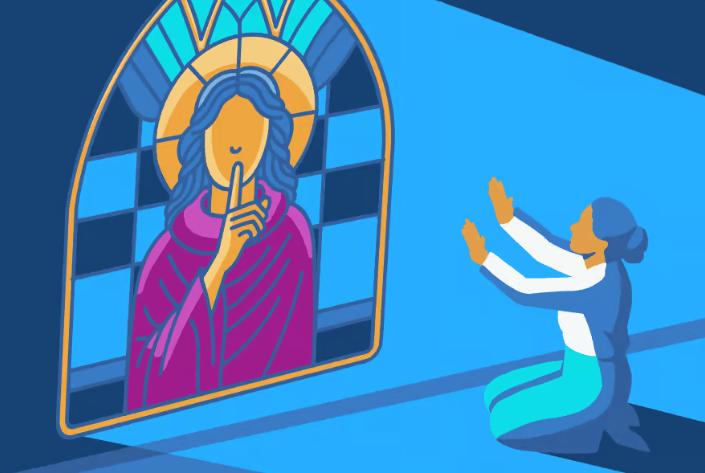
Credit: Sandstone Care
When that meaning-making system becomes the source of trauma itself, you're dealing with something particularly insidious. Spiritual abuse and religious trauma aren't just "religious issues" you can refer out to a chaplain. They're legitimate trauma presentations that show up in your office as anxiety, depression, complex PTSD, dissociation, and profound existential terror.
The VA's professional training resources on spirituality and trauma make this clear: ignoring the spiritual dimension of trauma isn't clinically neutral. It's a gap in care. And if you're practicing EMDR protocols without considering how spiritual wounding shapes your client's beliefs about themselves, you're missing a huge piece of the puzzle.
What Spiritual Wounding Actually Looks Like in Session
Spiritual trauma doesn't always announce itself. It's not like your client walks in and says, "Hi, I have religious trauma from growing up in a fundamentalist church where I was taught my body was evil and questioning was a sin." More often, it shows up sideways.
You see shame that won't budge, even after processing multiple memories. You see hypervigilance about being "good enough" that has nothing to do with childhood caregivers and everything to do with an angry, surveillance-state God. You see dissociation triggered by sacred music. You see clients who can't access self-compassion because they were taught it was selfish, that suffering proved devotion.
Research on religious trauma documents how doctrine-based harm creates specific patterns: fear-based compliance, perfectionism as a survival mechanism, inability to trust one's own perceptions, terror of punishment (often imagined as eternal), and profound grief over lost community and identity.
Here's a lightly sketched case vignette: A 35-year-old woman comes in for anxiety. Standard intake reveals nothing remarkable until you ask about childhood. She mentions growing up in a religious community but quickly changes the subject. Three sessions in, she has a panic attack during a bilateral stimulation set about "disappointing people." When you slow down and explore, she reveals a core belief: "If I make a mistake, I deserve to be destroyed." Not just criticized. Destroyed. That's not a metaphor. That's theology she internalized at age seven.
Or this one: A queer client struggling with self-worth. Their family rejected them citing scripture. Now they can't separate "my family hurt me" from "God hates me." The trauma isn't just relational. It's existential. Their nervous system interprets their identity as a threat to their eternal safety.
Studies examining spiritual abuse show these aren't edge cases. They're common presentations in trauma therapy, especially among clients from high-control religious backgrounds, LGBTQ+ individuals raised in conservative faiths, and anyone who experienced exclusion, shaming, or abuse within spiritual communities.
Your Nervous System on Spirituality: The Neurobiology
Here's where it gets interesting. Spiritual practices, when not weaponized, can actually be powerful nervous system regulators. Research on the neurobiology of spiritual practices shows that ritual, breathwork, imagery, and experiences of belonging activate the parasympathetic nervous system in ways that support trauma recovery.
Meditation practices calm the amygdala. Communal singing creates co-regulation. Ritual offers containment and predictability that a dysregulated nervous system craves. The sense of transcendence that can come from spiritual experience, whether through prayer, nature, or artistic practice, can help expand a client's window of tolerance.
But here's the clinical complication: those same practices can also be trauma triggers for clients with spiritual trauma. Ask a client who survived spiritual abuse to "breathe and center themselves" and you might activate the same breathwork they were forced to do during shaming rituals. Suggest visualization and you might recreate the dissociative state they learned in order to survive violent religious experiences.
Evidence on trauma-informed spirituality emphasizes that spiritual practices must be adapted to account for trauma history. You can't just borrow meditation from Buddhism, breathwork from yoga, or ritual from Indigenous traditions and assume it's universally healing. You need to understand the client's spiritual story first.

The Ethics of Spiritual Integration: Not Crossing Lines You Can't Uncross
Let's talk about what ethical spiritual integration actually means, because this is where therapists get nervous. And they should. The potential for harm is real.
Guidelines on addressing spirituality in psychotherapy make several distinctions that are critical:
Imposing beliefs versus supporting client-led exploration. You're not there to convert, save, or spiritually educate your clients. You're there to help them process their own spiritual experiences and beliefs. If you find yourself wanting to convince a client that their spiritual beliefs are wrong or that they need to believe what you believe, you've crossed a line.
Cultural appropriation versus grounded, culturally humble practice. Just because you took a weekend workshop on chakras doesn't mean you're qualified to integrate Eastern spiritual practices into your trauma therapy. Research on culturally responsive trauma treatment emphasizes that spiritual integration requires deep cultural humility, consultation with communities whose practices you're drawing from, and explicit consent from clients.
Role clarity: therapist versus spiritual director. You're a clinician with trauma therapist training, not a religious authority. APA guidelines stress that therapists need to be clear about the boundaries of their role. You can help a client process their spiritual trauma. You cannot tell them what to believe about God, the afterlife, or morality.
The ethics get particularly complex in EMDR for complex trauma when spiritual themes arise during processing. If your client starts accessing memories involving religious ritual abuse or spiritual terror, you need to be able to hold that clinically without either dismissing it as "just religious stuff" or getting pulled into theological debate.
Spiritual Integration That Actually Helps: Practical Applications
So how do you actually do this? How do you integrate spirituality in trauma counseling without violating ethics or retraumatizing clients?
Start with consent and collaboration. Before introducing any spiritual language, imagery, or practice, ask. "I'm wondering if it would be helpful to explore your spiritual beliefs as we work on this. What feels right to you?" Check for spiritual trauma history explicitly. "Have you ever had experiences in religious or spiritual settings that felt harmful or frightening?"
Trauma-informed approaches to spiritual abuse suggest several practical interventions:
Rituals of release or remembrance can help clients symbolically mark transitions, grieve losses, or reclaim power. A client who survived spiritual abuse might create a ritual to release toxic teachings, burning written beliefs they no longer hold. Another might create a ritual to honor the parts of their faith that still feel sacred.
Guided imagery with client consent and language means adapting your resourcing to fit their worldview. If your client finds comfort in Mary as divine mother, that can be a powerful resource. If they're atheist and find comfort in scientific concepts of interconnection, honor that. If they're exploring paganism after leaving Christianity, meet them there.
Breath practices or grounding framed appropriately requires asking how breathwork lands for them. For some clients, connecting breath to prayer feels healing. For others who were forced to speak in tongues or perform ecstatic breathing in cult contexts, any focus on breath is activating.
Studies on spiritual resources in trauma recovery show that when done ethically, spiritual integration can accelerate healing by accessing clients' existing meaning-making systems and sources of resilience.
Your Spiritual Story Matters Too: Clinician Self-Reflection
Here's what makes spiritual trauma training different from other advanced training: you can't do this work without examining your own spiritual history. Your beliefs about God, the sacred, morality, suffering, and meaning are all sitting in the room with you, whether you acknowledge them or not.
Research on vicarious trauma and spirituality shows that therapists working with spiritual trauma often experience their own spiritual crises. Hearing story after story of abuse perpetrated in God's name can shake your faith. Or it can radicalize it. Either way, you're not neutral.
Questions for self-reflection:
- What are my spiritual or religious beliefs, and how might they influence my clinical judgment?
- Do I have spiritual wounds that could interfere with holding my clients' experiences?
- Can I genuinely support a client's spiritual exploration even when it contradicts my beliefs?
- What spiritual practices do I rely on for regulation, and am I imposing those on clients?
- Do I need consultation or my own therapy to process spiritual countertransference?
Guidelines from ISTSS on trauma and spirituality emphasize that clinicians must develop self-awareness about their spiritual narratives before attempting spiritual integration with clients.
Building Real Competence in Spiritual Trauma Recovery
If you're reading this and thinking "I have no idea how to do any of this," you're not alone. Most EMDR training programs don't cover spiritual trauma. Most trauma-informed therapy training barely touches spirituality. The gap between knowing spirituality matters and knowing what to do about it is massive.
Recent research on clinical applications of spiritual practice points to the need for specialized training that goes beyond cultural competence 101. You need to understand the neurobiology of spiritual experience, the specific dynamics of spiritual abuse across different faith traditions, how to adapt trauma protocols for spiritual content, and how to maintain ethical boundaries while honoring the sacred.
This isn't something you figure out on your own. It requires structured training from clinicians who specialize in this intersection. It requires supervision that can help you navigate the complex countertransference that arises. It requires a framework that's clinically grounded while spiritually literate.
Where Healing Becomes Sacred (In the Non-Culty Way)
Here's what I know after years of watching therapists try to navigate spirituality in trauma work: the ones who do it well aren't the ones with all the answers. They're the ones comfortable with mystery, willing to learn from their clients' diverse spiritual experiences, and humble enough to acknowledge when they're out of their depth.
Spiritual integration in trauma therapy isn't about making trauma work more "spiritual." It's about recognizing that for many clients, spirituality is already woven through their trauma and their healing. The question isn't whether to address it. The question is whether you're equipped to address it with competence, ethics, and care.
If you're looking for training that actually prepares you for this work, that doesn't treat spirituality as either irrelevant or automatically healing, that gives you practical tools grounded in neurobiology and ethics, Sabrina's Clinical Applications of Spiritual Practice in Trauma Recovery course is worth your time. It's the kind of advanced trauma therapist training that fills the gap most programs ignore.
Because your clients are already bringing their spiritual stories into your office. The question is whether you're ready to meet them there.
References
Ash. (2021, July 13). Why Your Spiritual Practice Should be Trauma-Informed | Ash Riley | In My Sacred Space. Ash Riley | in My Sacred Space. https://inmysacredspace.com/trauma-informed-spirituality/
Bishop, B., Tisdale, T., & Putman, K. (2023, October 12). Spiritual direction and trauma recovery. Thinking Faith: The Online Journal of the Jesuits in Britain. https://www.thinkingfaith.org/articles/spiritual-direction-and-trauma-recovery
Calderone, A., Latella, D., Impellizzeri, F., Pasquale, P. de, Famà, F., Quartarone, A., & Calabrò, R. S. (2024). Neurobiological Changes Induced by Mindfulness and Meditation: A Systematic Review. Biomedicines, 12(11), 2613–2613. https://doi.org/10.3390/biomedicines12112613
Giovino, R. (2024, December 11). Trauma and Spiritual Abuse - Insight Digital Magazine. Insight Digital Magazine. https://www.thechicagoschool.edu/insight/psychology/trauma-spiritual-abuse/
Khan, A. J. (2019). Trauma and Diversity: A Case For Including Spirituality In Healing Trauma – Amanda J. Khan, PhD | International Society for Traumatic Stress Studies. Istss.org. https://istss.org/trauma-and-diversity-a-case-for-including-spirituality-in-healing-trauma-amanda-j-khan-phd/
Kober, S. E., Witte, M., Ninaus, M., Koschutnig, K., Wiesen, D., Zaiser, G., Neuper, C., & Wood, G. (2017). Ability to Gain Control Over One’s Own Brain Activity and its Relation to Spiritual Practice: A Multimodal Imaging Study. Frontiers in Human Neuroscience, 11. https://doi.org/10.3389/fnhum.2017.00271
Larsen, S., Hopkins, S., & Harris, I. (2024, March 25). Addressing religious or spiritual dimensions of trauma and PTSD. Www.ptsd.va.gov. https://www.ptsd.va.gov/professional/treat/txessentials/spirituality_trauma.asp
Muehlhausen, B. L. (2021). Spirituality and Vicarious Trauma Among Trauma Clinicians. Journal of Trauma Nursing, 28(6). https://doi.org/10.1097/jtn.0000000000000616
Nygaard, A. (2024, August 26). Religious Trauma: 9+ Signs of Spiritual Abuse & How to Heal. Sandstone Care. https://www.sandstonecare.com/blog/religious-trauma/
Park, C. L., Currier, J. M., J Irene Harris, Slattery, J. M., & American Psychological Association. (2017). Trauma, meaning, and spirituality : translating research into clinical practice. American Psychological Association.
Sunshaw, E. (2025). Religious Trauma | ISSTD Center for Advanced Studies. Isst-D.org. https://cfas.isst-d.org/content/religious-trauma
Team, T. T. (2025). Spiritual Trauma Recovery Training for Therapists | TTI. Traumatherapistinstitute.com. https://www.traumatherapistinstitute.com/Clinical-Applications-of-Spiritual-Practice-in-Trauma-Recovery
Ueda, S. (2024). The neurobiological link between prayer, breath control and serotonin release. International Journal of Science and Research Archive, 13(2), 629–646. https://doi.org/10.30574/ijsra.2024.13.2.2136
Walker, D. F., Courtois, C. A., Aten, J. D., & American Psychological Association. (2015). Spiritually oriented psychotherapy for trauma. American Psychological Association.
Stay connected with fun info, news, promotions and updates!
Join our mailing list to receive the latest news and updates from our team.
Don't worry, your information will not be shared.