Trauma Training
Clinical Competencies in Treating Dissociative Identities: Bridging Lived Experience and Science For the Trauma Therapist
Trainer: Jamie Marich, Ph.D., LPCC-S, REAT
On-Demand: Available with lifetime access for asynchronous learning. This course was recorded on March 19th and 20th, 2026.
When Dissociation Shows Up, and Your Training Did Not Prepare You
Most therapists were taught that dissociation is rare, extreme, and best left to “specialists.” In real practice, it is everywhere in complex trauma work. Clients “go away” right when you get close to certain memories. They lose time, feel like “different versions” of themselves are taking over, or describe watching life from outside their bodies. You feel the weight of deciding what is ethical, what is actually possible, and how to maintain competency and reduce risk when dissociation is part of the picture.
Most clinicians were given very little real training on dissociation:
- Minimal coverage in graduate programs.
- The sense that dissociation is rare, extreme, or “for specialists only.”
- So you are left with understandable questions:
- Is this dissociation, something else, or both?
- How do I assess it in a way that actually guides treatment?
- How do I adapt the eight phases without abandoning fidelity or myself as a clinician?
Your hesitation is not avoidance. It is an ethical clinical responsibility when you have not been given enough support.
This course is designed to help you get there, and you will:
- Develop confidence in assessment, case conceptualization, and adaptation with dissociative clients.
- Practice “assessment before activation” and remember that “competence includes pacing.”
- Bridge scientific models and lived experience so your work reflects both what research says and what clients actually report.
This is not a generic overview of dissociation, and it is not meant for every clinician. It is a fit for trauma therapists who are ready to move from hesitation to informed, thoughtful action with dissociative clients.

Practical Interventions You’ll Learn
- Assess dissociative experiences using clinical inquiry and formal screening tools
- Identify adaptive and maladaptive dissociation through lived experience
- Differentiate dissociation from emotional regulation challenges
- Map a client’s dissociative profile using the Window of Tolerance framework
- Conceptualize dissociation as a protective survival response
- Identify parts, selves, or dissociative states without pathologizing or forcing integration
- Honor the client's language and meaning-making as a form of clinical inquiry
- Modify grounding and stabilization strategies to reduce dissociative drift
- Reduce clinician fear, bias, and misinformation related to dissociation
- Apply dissociation-sensitive approaches to containment, resourcing, and competency‑based risk reduction

What You’ll Learn in This Training
By the end of this training, you will be able to:
- Understand dissociation across the spectrum
Define and distinguish dissociation from other trauma responses, and recognize when it is adaptive, maladaptive, or both. - Assess and conceptualize dissociation with confidence
Use dissociation‑informed assessment and case conceptualization - Bridge lived and learned experience in your clinical practice
Integrate phenomenology, client narratives, and research to challenge myths and reduce stigma in dissociation work. - Practice ethical, scope‑aware dissociation care
Normalize your own hesitation, clarify scope and referral decisions, and use stigma‑free, client‑centered language that aligns with client goals.

Who is this course for?
This course is designed for a specific group of clinicians. It may be a strong fit if you are:
- A clinician (licensed or license‑eligible), often working in addictions, community mental health, or complex trauma settings
- Regularly encountering dissociative presentations but lacking formal, integrated training on dissociation
- Unsure how to assess dissociation
- Concerned about destabilizing or retraumatizing clients if you engage dissociation more directly
- Frustrated by rigid, dogmatic models that either prohibit engaging parts or demand one‑size‑fits‑all “integration” goals
This course is not designed as an introductory training for brand‑new therapists or those without a trauma foundation. It is for clinicians who already have solid trauma and want to integrate dissociation into what they are already doing, not replace their entire approach.

About Your Trainer, Jamie Marich, Ph.D., LPCC-S, REAT

Dr. Jamie Marich (she/they) began her career as a humanitarian aid worker in Bosnia-Hercegovina from 2000-2003, primarily teaching English and music. Jamie travels internationally teaching on topics related to trauma, EMDR therapy, expressive arts, mindfulness, and yoga, while maintaining a private practice and online education operations in her home base of Akron, OH. Marich is the founder of the Institute for Creative Mindfulness and the developer of the Dancing Mindfulness approach to expressive arts therapy.
Books authored by Dr. Jamie Marich:
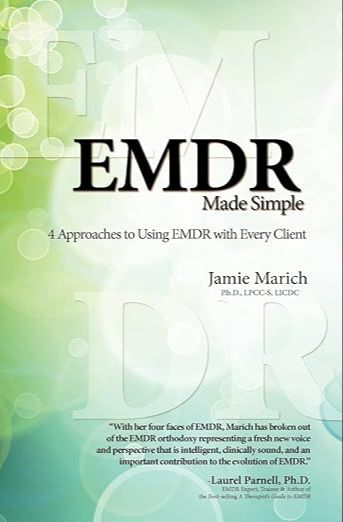
- EMDR Made Simple: 4 Approaches for Using EMDR with Every Client (2011)
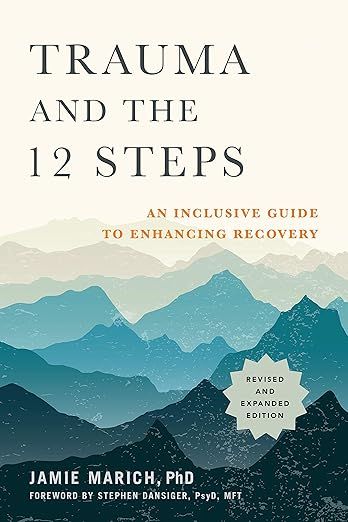
- Trauma and the Twelve Steps: A Complete Guide for Recovery Enhancement (2012)
- Creative Mindfulness (2013)
- Trauma Made Simple: Competencies in Assessment, Treatment, and Working with Survivors
- Dancing Mindfulness: A Creative Path to Healing and Transformation (2015)
- Process Not Perfection: Expressive Arts Solutions for Trauma Recovery (2019)
- The Healing Power of Jiu-Jitsu: A Guide to Transforming Trauma and Facilitating Recovery (2022)
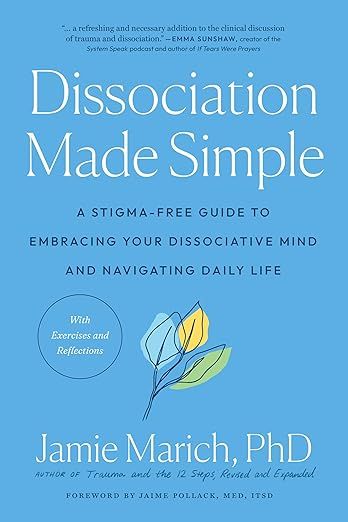
- Dissociation Made Simple: A Stigma-Free Guide to Embracing Your Dissociative Mind and Navigating Life (January 2023), also with a clinical flipchart
- You Lied to Me About God (Autumn 2024)
Books Co-Authored and Contributing Chapters
- EMDR Therapy & Mindfulness for Trauma-Focused Care (2018), co-authored with Dr. Stephen Dansiger
- Healing Addiction with EMDR Therapy: A Trauma-Focused Guide (2021), with Springer Publishing
- Chapter on mindfulness in the forthcoming Oxford University handbook on EMDR Therapy
- Chapter in Women Therapists on Healing (2026)
Recognition, Awards, and Media Features
- The New York Times featured Marich’s writing and work on Dancing Mindfulness in 2017 and 2020
- NALGAP: The Association of Gay, Lesbian, Bisexual, Transgender Addiction Professionals and Their Allies awarded Jamie with their esteemed President’s Award in 2015
- The EMDR International Association (EMDRIA) granted Jamie the 2019 Advocacy in EMDR Award
- The Huffington Post published her personal story of being out as a clinical professional with a dissociative disorder in May 2023
- You Lied to Me About God received a Kirkus “starred review.”
Additional Information
Agenda
Learning Objectives
Prerequisites
Continuing Education
Course Completion
Cancellation Policy